
In today’s energy-conscious world, businesses are under increasing pressure to reduce carbon emissions and cut operating costs. One technology helping organisations achieve both goals is the air source heat pump (ASHP).
Whether you’re managing an office building, warehouse, retail space, or hospitality venue, understanding how these systems work — and what they can offer — can make a big difference to your bottom line and sustainability strategy.
What Is an Air Source Heat Pump?
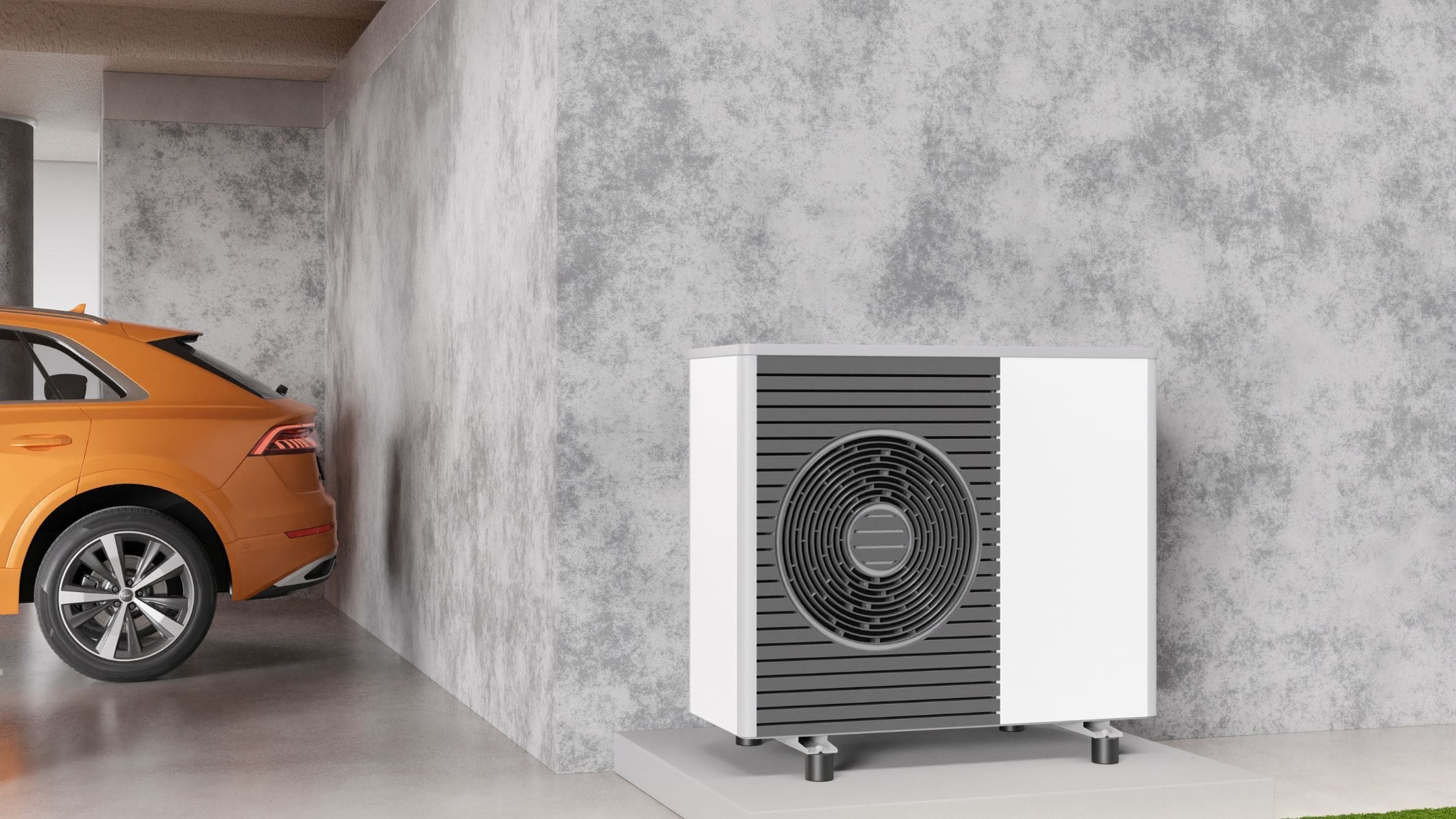
An air source heat pump is an energy-efficient system that transfers heat from the outside air to provide heating and hot water inside a building. Rather than generating heat by burning fuel (like gas or oil), it extracts naturally occurring heat from the air — even when it’s cold outside.
ASHPs work on the same principle as a refrigerator, but in reverse:
- Heat absorption – The outdoor unit draws in air and passes it over a refrigerant fluid, which absorbs heat energy.
- Compression – The refrigerant is compressed, increasing its temperature.
- Heat exchange – The hot refrigerant transfers its heat to water or air inside the building through a heat exchanger.
- Circulation – The heated air or water is then distributed via radiators, underfloor systems, or air ducts to provide space heating or hot water.
Because the system moves heat rather than generating it, it can deliver three to four units of heat for every one unit of electricity used — a significant efficiency boost.
Key Benefits for Businesses
1. Lower Energy Costs
Air source heat pumps are incredibly efficient. With a coefficient of performance (COP) typically between 3 and 4, they can reduce energy use by up to 60% compared to electric or oil-based heating systems. Over time, this translates into substantial cost savings on energy bills.
2. Reduced Carbon Footprint
Switching to a heat pump can cut your organisation’s carbon emissions dramatically — especially when powered by renewable electricity. Many businesses use ASHPs as part of their net zero or ESG (Environmental, Social, and Governance) strategies.
3. Government Incentives
In the UK, there are several financial incentives and grants available to support the installation of renewable heating technologies. These can significantly offset installation costs and improve return on investment — for example, through schemes like the Boiler Upgrade Scheme (BUS).
4. Low Maintenance
Once installed, air source heat pumps require relatively little maintenance. Routine checks and occasional servicing ensure reliable performance and longevity — typically lasting 15–20 years.
5. Heating and Cooling in One System
Many commercial ASHPs are reversible, meaning they can provide both heating in winter and cooling in summer. This makes them an ideal year-round climate solution for offices, retail spaces, and hospitality venues.
6. Improved Workplace Comfort
Because ASHPs deliver steady, even temperatures, they create a more comfortable environment for employees and customers alike — free from the sharp fluctuations common in traditional heating systems.
Is an Air Source Heat Pump Right for Your Business?
Air source heat pumps are most effective for well-insulated buildings and can be scaled to suit small offices or large industrial facilities. Before installation, a professional assessment can help determine the best system size, placement, and expected savings for your specific property.
Businesses that combine ASHPs with solar panels or battery storage can achieve even greater energy independence and sustainability benefits.
The Bottom Line
Investing in an air source heat pump is more than just an upgrade to your heating system — it’s a forward-thinking business decision. You’ll cut operational costs, reduce emissions, and demonstrate your commitment to sustainability — all while improving comfort and energy resilience.
If your organisation is ready to explore renewable heating, now is the perfect time to consider an air source heat pump.

