
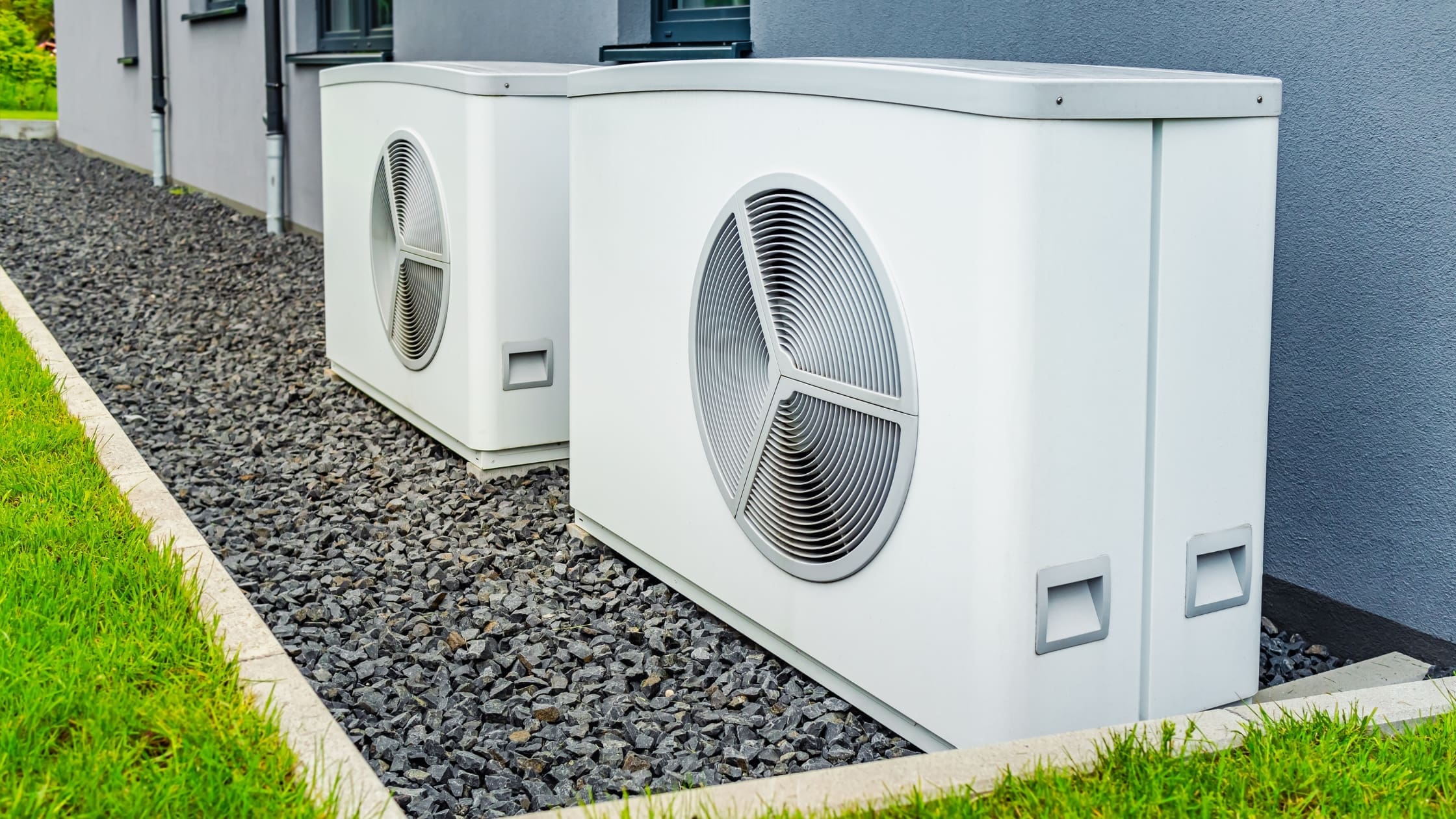
Air source heat pumps (ASHPs) are energy-efficient heating and cooling systems that utilise renewable energy from the air to heat and cool buildings. They are a widely used alternative to traditional fossil fuel-based heating and cooling systems and have gained significant popularity in recent years.
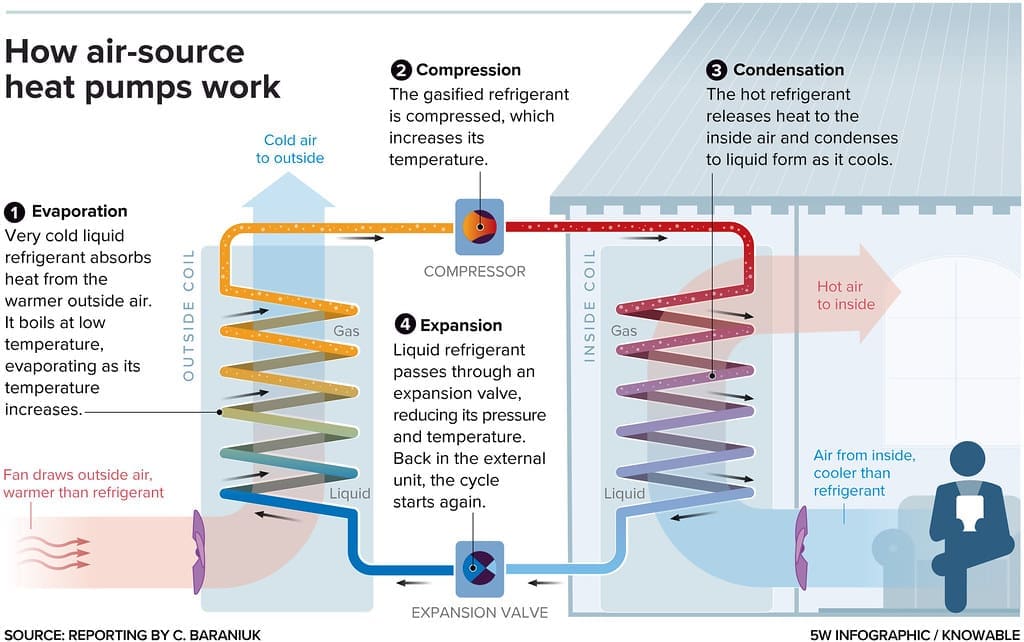
An ASHP works by extracting heat from the external air, even in colder temperatures, and transferring it indoors. It operates like an air conditioner, taking heat from the indoor air and releasing it outside, but it also has the ability to reverse the process and produce heat.
Components of an Air Source Heat Pump
- Outdoor Unit: The outdoor unit of a heat pump contains the heat exchanger where the heat is extracted or released, depending on the season. It uses a fan and refrigerant to cool or heat the air as needed.
- Compressor: The compressor is the heart of the heat pump. It compresses the refrigerant, increasing its pressure and transferring the heat to the indoor unit.
- Indoor Unit: The indoor unit of a heat pump contains the evaporator where the heat is extracted from the air. It also acts as a furnace, producing warm air during cold weather.
- ** Thermostat**: The thermostat is a control device that regulates the heat pump’s operation. It senses the temperature in the building and tells the heat pump when to heat or cool the air.
Advantages of Air Source Heat Pumps
- Energy Efficiency: Air source heat pumps are highly energy-efficient, as they recover heat from the air and convert it to usable heat. They can achieve energy savings of 50-70% compared to traditional heating and cooling systems.
- Environmentally Friendly: ASHPs produce renewable heat, reducing the reliance on fossil fuels and contributing to a more sustainable future.
- Compact Design: ASHPs are compact and can be installed indoors or outdoors, depending on the space available. They can be easily integrated into new or existing buildings.
- Long-Term Cost Savings: In addition to the initial installation cost, ASHPs have the potential to provide significant cost savings in the long run. They reduce energy bills, especially when combined with renewable energy sources like solar panels.
- Versatility: ASHPs can be used for both heating and cooling, making them a versatile solution for both residential and commercial buildings.
Considerations & Limitations
While air source heat pumps offer numerous advantages, they are not suitable for every situation. Factors such as climate, building insulation, and system design need to be considered to ensure optimal performance and efficiency.
Additionally, ASHPs require regular maintenance and servicing to ensure optimal performance. Proper sizing and selection of the heat pump is also crucial to avoid system inefficiencies and unnecessary energy consumption.
Summary
In conclusion, air source heat pumps are an energy-efficient and environmentally friendly alternative to traditional heating and cooling systems. With their ability to provide heating, cooling, and dual-purpose functionality, ASHPs are a promising solution for sustainable and comfortable buildings.

